Introduction
Long Rookie Sideloader sessions can be convenient when installing multiple apps at once, but they often carry a higher risk of failures, freezes, or corrupted installs. Issues such as memory leaks, USB instability, background system overload, or outdated dependencies often surface during extended use, especially on Windows systems. Understanding why these failures happen and how to prevent them can save hours of troubleshooting and repeated installs. In this guide, we’ll share expert-backed tips to help you maintain stability, reduce errors, and ensure smooth, successful installations even during long Rookie Sideloader sessions.
Common Issues During Extended Use
Common Issues During Extended Use include a sudden loss of ADB connection, application timeouts, corrupted file transfers, or a system-wide slowdown that forces the user to manually interrupt the process.
Why do install failures happen over time?
Why Install Failures Happen Over Time is primarily due to accumulated factors such as memory fragmentation (memory leaks), transient USB noise, and increased competition for resources among background processes, which become unsustainable after several hours.
Importance of Proper Session Management
Implementing Proper Session Management, treating each installation or transfer as a delicate operation with defined start and stop points, is the most effective way to ensure a stable, successful workflow.
What Causes Install Failures in Long Sessions
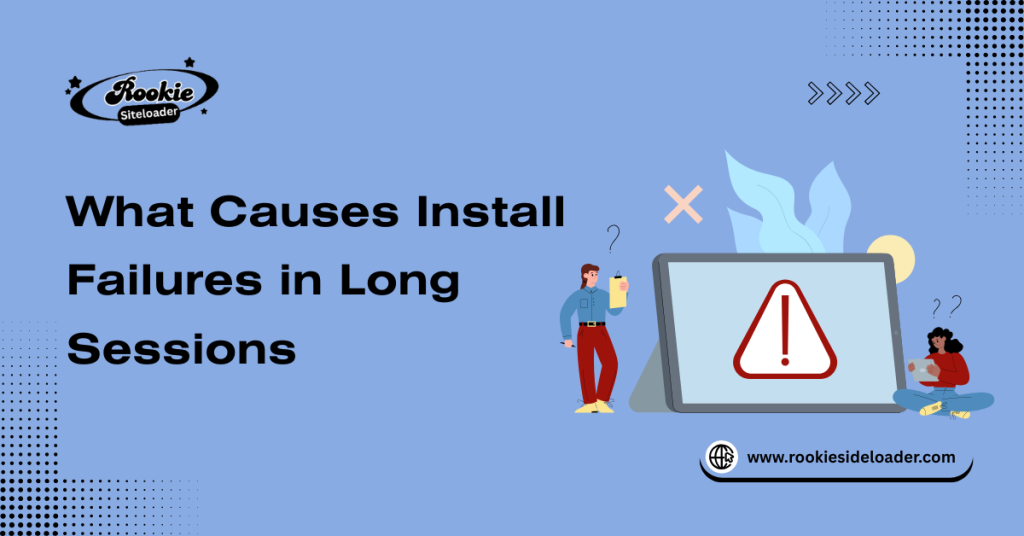
Failures in extended sessions can be traced back to three main points of system strain:
Memory and Resource Exhaustion
Rookie Sideloader, like many apps, can suffer from minor memory fragmentation over time. In a long session, this cumulative memory use can lead to Memory and Resource Exhaustion on the host PC.
Background Processes Interference
Over hours, scheduled tasks, notifications, or a security scan can briefly spike CPU usage, causing a critical Background Processes Interference that breaks the sensitive ADB communication link.
Network and USB Instability
Even the slightest fluctuation in power or signal quality on the USB cable, exacerbated by continuous, high-speed data transfer, can cause Network and USB Instability (including the ADB connection).
Cumulative Cache Build-Up
The application’s temporary files and logs, if not cleared, can accumulate and consume valuable disk space and memory, contributing to overall sluggishness.
Preparing Your System for Long Sessions
Pre-session system hygiene is the best defense against mid-session failures.
- Freeing Up RAM and CPU: Close all unnecessary applications (primarily web browsers with multiple tabs) to Free Up RAM and CPU resources, ensuring the sideloading process has dedicated system overhead.
- Closing Non-Essential Background Tasks: Use the Task Manager to identify and temporarily disable any Non-Essential Background Tasks (such as auto-updaters or cloud sync services) known to interfere with ADB stability.
- Checking USB Connections and Drivers: Always use a high-quality, short cable and plug into a reliable rear-motherboard USB 3.0 or 3.1 port. Ensure all USB Connections and Drivers are up to date and stable.
- Ensuring Stable Internet or Offline Prep: If the files are downloaded locally, you can safely disconnect from the internet. If files are downloaded during the session, guarantee a Stable Internet connection to prevent download interruptions that trigger install failures.
Session Management Best Practices
Manage the sideloading workflow proactively, not reactively.
- Setting Up Multiple Short Sessions: Instead of attempting 30 installs at once, schedule Multiple Short Sessions of 5-10 installs each, providing brief breaks to the system and the headset.
- Pausing Between Installs: After every few successful transfers, Pause Between Installs for a minute. This allows the Quest headset to process the new data and the PC to clear any residual transfer buffers.
- Tracking Successful vs Pending Installs: Keep a separate checklist to manually verify them. Do not rely solely on the application’s internal queue, especially if errors have occurred.
- Avoid Overload on Device: Do not attempt to charge the headset, use its internal storage browser, or run any apps while sideloading is active, as this can cause Overload on Device.
Monitoring During Active Sessions
Vigilant monitoring can catch problems before they escalate into failures.
- Watching CPU and RAM Usage: Keep the Windows Task Manager open and monitor the Rookie Sideloader process for unexpected spikes in CPU and RAM usage, which indicate an impending leak or conflict.
- Checking Logs for Errors: Pay attention to the application’s built-in log or console window. Even minor warnings should prompt a closer look, as they are early signs of errors in logs.
- Verifying Device Detection: Periodically check that the headset remains listed as “Device Connected.” If it flickers or disappears, the session is already compromised.
- Ensuring Proper File Transfers: Monitor progress bars to ensure a smooth transfer. Stuttering or lengthy stalls without progress are signs of Improper File Transfers or I/O conflicts.
Handling Failures Mid-Session
When a failure occurs, the response must be controlled to prevent the rest of the session from being affected.
Safe Retry of Failed Installs
If an install fails, perform the Safe Retry only once. If it fails a second time, pause the entire session, disconnect the headset, and restart the sideloading tool.
Resetting Permissions Without Restarting
In many cases, ADB instability can be fixed by restarting the ADB service (often an option within the tool or via a quick command-line command) to refresh the connection without requiring a full PC restart.
Clearing Cache if Necessary
If a persistent download or install failure occurs, manually clearing the cache can resolve issues caused by corrupted temporary files.
Minimizing Data Loss
Prioritize completing the current file transfer successfully before attempting any troubleshooting steps to Minimize Data Loss and corruption risk.
Long-Term Strategies to Prevent Installation Failures
Establish a routine maintenance schedule to keep the sideloading environment clean.
- Regular Cache and Log Cleanup
Periodically delete the application’s cache, temporary files, and logs. This is essential for preventing Cumulative Cache Build-Up.
- Safe Restart Intervals
Establish Safe Restart Intervals for the entire PC, particularly before beginning any long sideloading session, to clear memory and ensure a pristine OS environment.
- Keeping the Sideloading Environment Stable
Avoid installing new security software or USB drivers, or making major Windows updates, just before a long session. A stable environment is predictable.
- Backup Strategy for Critical Data
Before any primary sideloading process, ensure a quick Backup Strategy for Critical Data (e.g., game saves) is in place to protect against the worst-case scenario.
Advanced Tips for Stable Sessions
These tips use Windows and system knowledge to manage resources more precisely.
Using Task Manager to Monitor Load
Beyond just watching RAM, use the “Details” tab to manually verify that Rookie Sideloader’s process priority is set to “Normal” or “Above Normal” to prevent it from being starved.
Scheduling Installs Strategically
Schedule your longest installs (multi-gigabyte files) immediately after a fresh PC restart when system load is guaranteed to be at its lowest.
Keeping Device in Developer Mode
Ensure the Meta Quest remains permanently in Developer Mode throughout the entire session to prevent the system from automatically disabling the ADB connection.
Avoiding Simultaneous Heavy Operations
Do not run game backups, disk defragmentation, or extensive file compression/decompression while sideloading, as these actions compete directly for the same I/O and CPU resources.
Frequently Asked Questions
Why do long Rookie Sideloader sessions fail?
Long Rookie Sideloader sessions fail due to accumulating system strain from Memory and Resource Exhaustion, transient Network and USB Instability, and interference from Background Processes.
How can I prevent install failures during long sessions?
You can prevent install failures during long sessions by practicing Session Management Best Practices, such as Setting Up Multiple Short Sessions and closing all Non-Essential Background Tasks before starting.
Does RAM or CPU affect session stability?
Yes, RAM or CPU usage significantly affects session stability. High usage (especially above 85% of RAM) can cause system freezes or slow response times, disrupting the sensitive ADB connection.
Can USB issues cause install failures?
Yes, USB issues are a primary cause of install failures. Poor cables, unpowered hubs, or front-panel USB ports can cause power or signal fluctuations, leading to loss of device detection mid-transfer.
Should I split installs into shorter sessions?
Yes, you should split installs into shorter sessions. Setting Up Multiple Short Sessions allows the PC and the Quest time to breathe, process data, and clear buffers, which drastically improves reliability.
How do I safely retry failed installs?
You can safely retry failed installs once. If the installation fails a second time, pause the session, disconnect the headset, and restart the Rookie Sideloader application before attempting again.
Can cache buildup lead to session errors?
Yes, cache buildup can lead to session errors over time. Cumulative Cache Build-Up consumes system resources and can harbor corrupted temporary files, making Regular Cleanup of Cache and Logs necessary.
What is the best way to monitor session health?
The best way to monitor session health is to watch CPU and RAM Usage in the Windows Task Manager and vigilantly Check Logs for Errors in the sideloading application’s console window.
Conclusion
The difference between a successful, stress-free sideloading spree and a frustrating cycle of failures lies in disciplined preparation and management. Sideloading large files in the Rookie Sideloader is a delicate process that requires the operating system’s full, undivided attention and a pristine USB connection. The errors that arise during extended sessions are rarely random; they are predictable consequences of accumulated digital “clutter,” resource starvation, and minor hardware instability.
Latest Post: